Tracing Input Cascades Across Hybrid Web Challenges That Blend Instant Reactions With Extended Group Planning in Varied Age Settings
Geschrieben von Jakob Lorenz · 21.10.2026
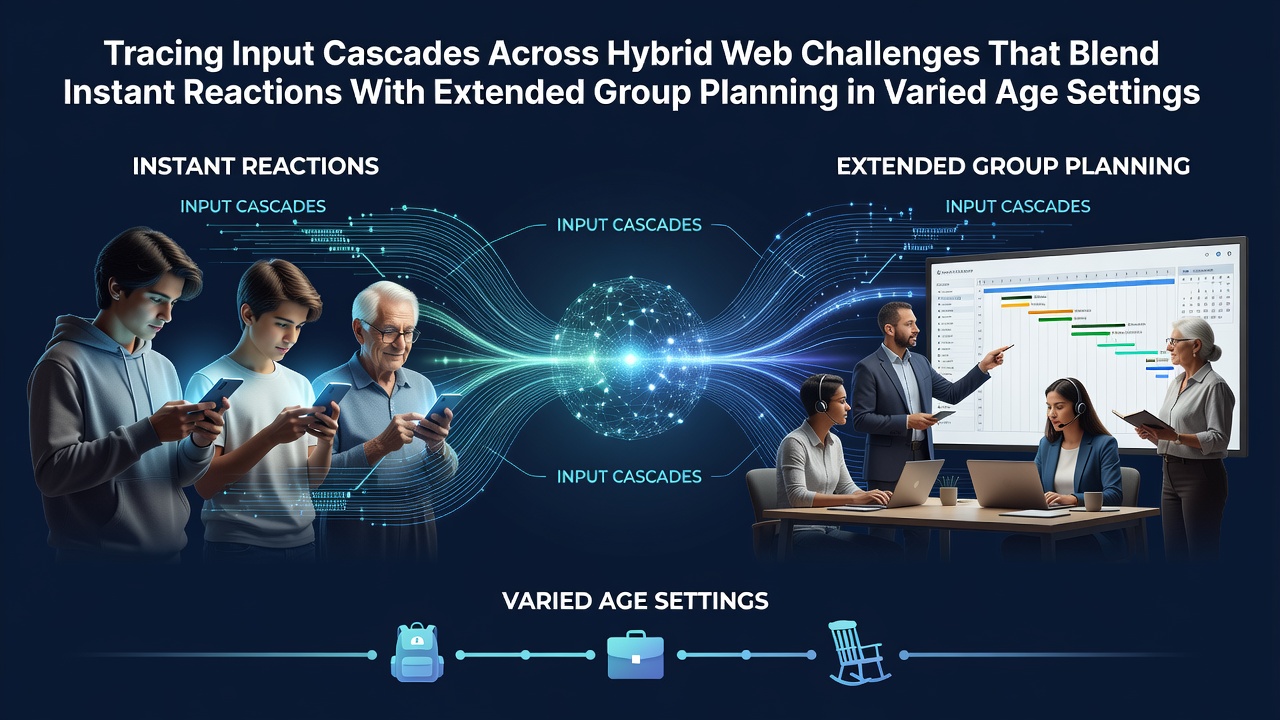
Tracing Input Cascades Across Hybrid Web Challenges That Blend Instant Reactions With Extended Group Planning in Varied Age Settings
Hybrid web challenges combine immediate reflex actions with prolonged group strategy sessions on shared browser platforms, and input cascades trace how a single keystroke or click propagates through team decisions over time. Observers note these cascades often begin with split-second responses in action segments before feeding into collective planning phases that unfold across minutes or hours. Research from academic institutions shows such systems appear in family-oriented multiplayer environments where participants range from young children to older adults.
Core Elements of Input Propagation
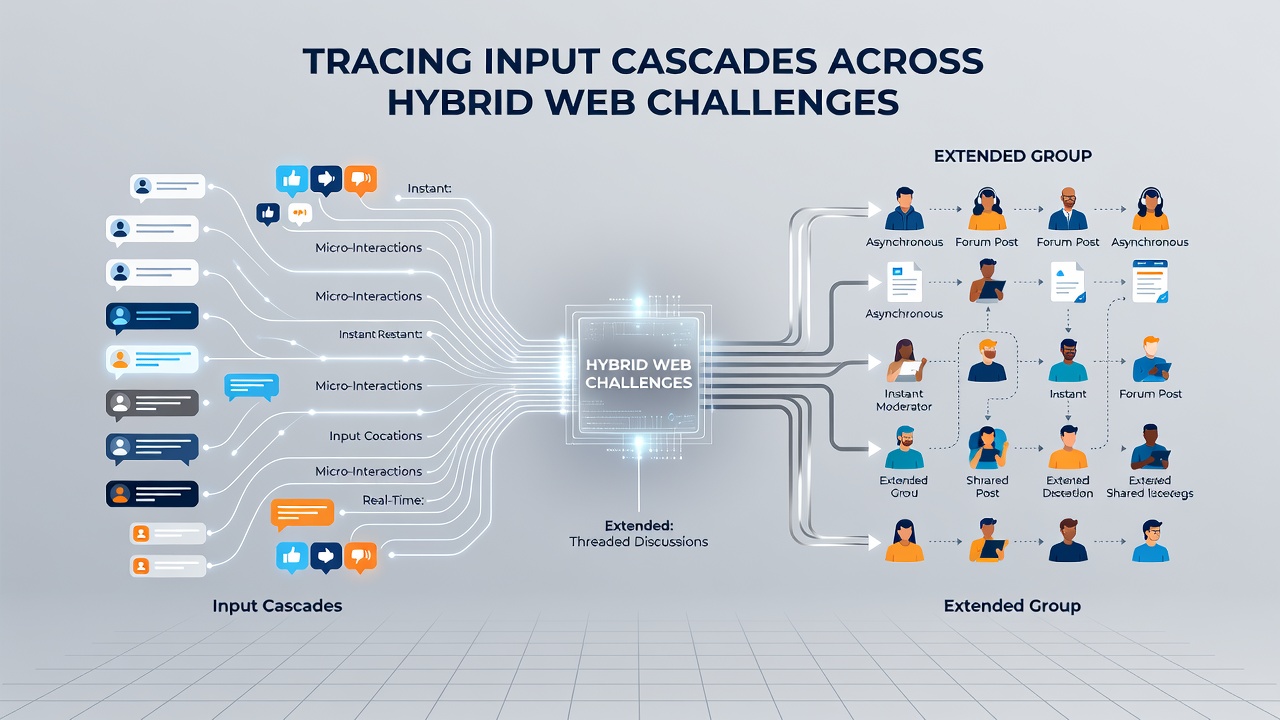
Input cascades start when one participant executes a rapid reflex task such as timing a jump or dodging an obstacle, then that action alters shared variables visible to the entire group. Subsequent players adjust their own inputs based on updated states, creating layered sequences that researchers map through log analysis and visualization tools. Data indicates these chains become more complex in mixed-age groups because younger players tend toward faster individual reactions while older participants contribute longer-term coordination patterns.
Studies reveal that browser platforms record each input with timestamps, allowing analysts to reconstruct how an early reflex choice influences later strategic branches. For instance one documented sequence showed a child's quick collection of resources directly enabling an adult-led route change that affected the whole team's progress during a narrative exploration segment. Those who've examined platform telemetry note that age variance introduces distinct timing signatures within the same cascade.
Integration of Reflex Tasks and Planning Horizons
Hybrid designs separate phases so instant reactions feed data into extended planning windows without breaking session flow. Participants switch between modes where reflex elements generate immediate feedback that populates shared maps or inventories used during group deliberation periods. Evidence suggests this structure supports engagement across age ranges because quick tasks maintain attention for younger users while planning components allow deeper investment from older ones.
Platform logs demonstrate that successful cascades often feature clear handoff points where reflex outputs become planning inputs, such as when collected items unlock decision trees discussed collectively. Researchers have observed that mixed-age sessions produce longer average cascade lengths compared to single-age cohorts, with transitions occurring at roughly 40 to 50 percent of total session duration in examined cases.
Age-Related Patterns in Cascade Dynamics
Varied age settings introduce measurable differences in how inputs propagate because cognitive processing speeds and experience levels vary. Younger participants generate denser clusters of short-term reflex inputs that branch outward, while older participants consolidate those branches into fewer but more consequential planning moves. Figures from multi-site observations indicate groups with participants spanning at least three decades produce cascades with greater structural depth than homogeneous groups.
One analysis of shared adventure sessions found that input volume from children often exceeded adult contributions by a factor of two during reflex segments, yet adult inputs carried higher weight during planning segments that determined final outcomes. This pattern holds across multiple browser environments according to aggregated telemetry reviewed by independent research teams.
Analytical Approaches and October 2026 Updates
Tracing methods rely on graph-based models where each node represents an input event and edges capture influence relationships between participants. Tools developed for these analyses handle real-time data streams from browser sessions and generate visualizations that highlight cascade bottlenecks or amplification points. In October 2026 several platforms introduced updated logging features that capture additional metadata such as hover durations and chat timestamps, improving reconstruction accuracy for mixed-age studies.
Academic reports link these enhancements to better understanding of how age diversity modulates cascade resilience, meaning the ability of a sequence to recover from an erroneous reflex input through later strategic corrections. Government sources including the U.S. Department of Education have referenced similar data patterns when discussing digital collaboration tools for family learning environments.
Conclusion
Input cascade tracing provides concrete maps of interaction sequences within hybrid web challenges that merge instant reactions and extended planning across age groups. Continued platform refinements and analytical techniques continue to refine these maps, revealing consistent structural features tied to participant demographics and task phasing.