Pattern Mapping in Collective Reflex Sequences That Connect Action Inputs to Long-Term Strategic Outcomes Across Shared Web Adventures for Mixed Age Groups
Geschrieben von Jakob Lorenz · 23.9.2026

Pattern Mapping in Collective Reflex Sequences That Connect Action Inputs to Long-Term Strategic Outcomes Across Shared Web Adventures for Mixed Age Groups
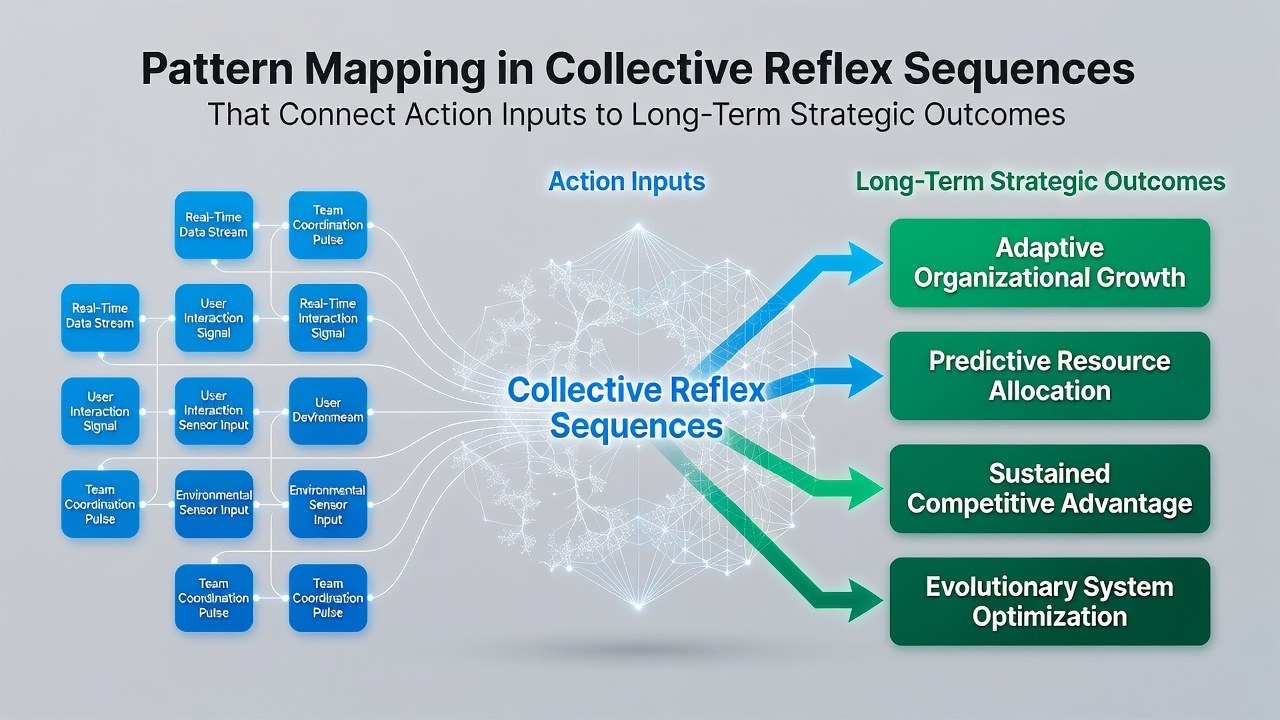
Pattern mapping emerges in collective reflex sequences when players process rapid action inputs during shared web adventures and link those moments to extended strategic planning across mixed age groups, and researchers track these connections through gameplay data collected from browser platforms that support simultaneous participation by children and adults. Studies from academic institutions show that reflex tasks such as timing-based navigation combine with pattern recognition to form sequences that influence later decisions in narrative progression, while coordination across participants strengthens when groups maintain consistent input patterns over multiple sessions.
Core Mechanisms of Reflex-to-Strategy Linkage
Action inputs in these environments generate immediate feedback loops that participants record internally, and observers note how repeated exposure allows groups to identify recurring structures that extend beyond single rounds into longer campaign arcs. Data from platform analytics indicates that mixed age teams achieve higher completion rates when younger players handle reflex components and older participants translate those results into route selections or resource allocations, creating a division that aligns with developmental differences in processing speed and foresight. Evidence from controlled observations reveals that collective sequences stabilize when all members contribute to mapping the same set of triggers, reducing miscommunication during transitions between fast-paced segments and planning phases.
Platform Features Supporting Mixed Age Participation
Browser-based systems incorporate adjustable difficulty layers that preserve reflex challenges while scaling strategic depth, and developers integrate shared interfaces that display collective pattern histories for review between rounds. Figures from industry reports demonstrate increased session durations when platforms allow real-time annotation of sequences, enabling groups to review how early inputs shaped later outcomes without interrupting flow. In September 2026 several platforms introduced modular logging tools that export mapped patterns for post-session analysis, and these updates coincide with research initiatives examining retention rates across age spans from eight to sixty-five.
One documented case involved family groups navigating procedurally generated environments where reflex sequences involving synchronized jumps fed directly into decisions about territory expansion, and participants who maintained visual records of input patterns reported improved accuracy in subsequent strategic choices. Academic analyses confirm that the strength of these linkages correlates with the frequency of joint review sessions rather than individual practice time alone.
Empirical Observations Across Group Configurations
Longitudinal tracking conducted by research teams at multiple universities shows that groups containing balanced age distributions develop more robust pattern maps than single-age cohorts, because varied perspectives contribute distinct interpretations of the same input sequences. Australian Institute of Family Studies publications highlight how shared digital activities that blend reflexes with narrative elements support intergenerational communication when participants explicitly discuss the mapping process after each stage. Metrics collected from European Union funded projects on digital play further indicate that consistent exposure to these mechanics over eight weeks produces measurable gains in collaborative planning scores across all age brackets involved.
Additional data points reveal that visual overlays displaying historical reflex sequences help participants anticipate strategic branches earlier in each session, and platforms incorporating these overlays record lower rates of repeated errors during extended play. Those studying the phenomenon emphasize that the mapping process operates through iterative reinforcement rather than explicit instruction, allowing natural emergence of collective strategies from accumulated inputs.
Integration with Narrative Exploration Elements
Shared web adventures frequently embed reflex sequences inside story-driven segments, and pattern mapping becomes essential when groups must decide which explored paths to pursue based on prior action outcomes. Research indicates that successful teams maintain running tallies of sequence results that directly inform choices about character progression or environmental interactions, and this practice scales effectively across mixed age settings because the underlying data remains accessible through simple interface elements. Observers have recorded instances where younger members identify short-term patterns that older members then project onto multi-session objectives, producing outcomes that neither subgroup achieves independently.
Conclusion
Pattern mapping in collective reflex sequences provides a measurable framework through which action inputs translate into long-term strategic outcomes during shared web adventures for mixed age groups, and ongoing platform developments continue to refine the tools that support this translation. Data collected through 2026 demonstrates consistent patterns of improved coordination when groups actively document and review their input histories, while academic and industry sources document the mechanisms that enable these connections to form reliably across diverse participant compositions. Continued observation of these dynamics supplies additional insight into how browser-based environments facilitate integrated reflex and strategy development at scale.