Cross Cultural Alliances Formed Through Timed Challenges in Web Hosted Multiplayer Strategy Puzzles for School Programs
Geschrieben von Jakob Lorenz · 4.11.2026
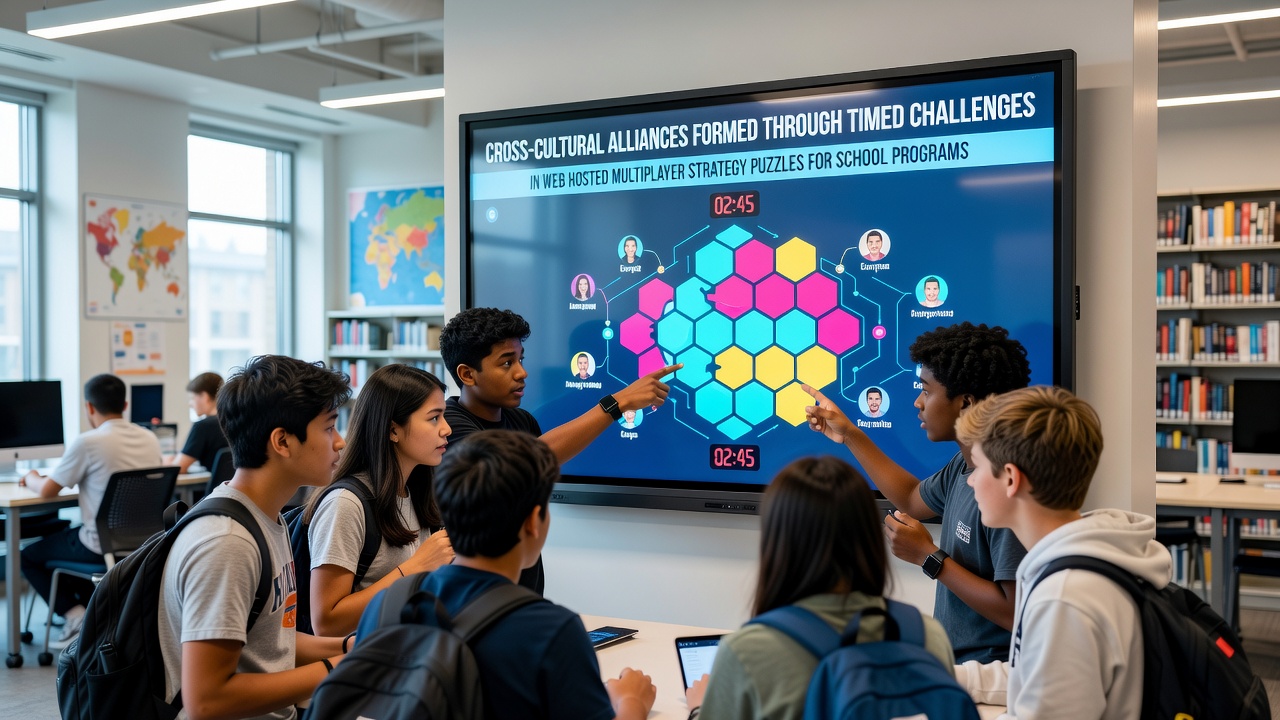
Cross Cultural Alliances Formed Through Timed Challenges in Web Hosted Multiplayer Strategy Puzzles for School Programs
Web hosted multiplayer strategy puzzles have gained traction in school programs across multiple continents, where timed challenges require participants to synchronize actions in real time. These platforms connect classrooms in distant regions through shared interfaces that track input sequences and collective progress toward puzzle solutions.
Timed elements force groups to allocate roles quickly, and data from educational implementations show that students from varied cultural backgrounds develop coordination patterns during these sessions. Researchers have documented instances where teams from Europe and Asia completed joint objectives faster when they established shared signals within the first few minutes of play.
Mechanics of Timed Challenges in Educational Settings
Web platforms host puzzles that blend immediate reflex responses with longer term planning phases, and school programs schedule these activities during regular class hours. Participants receive prompts that demand simultaneous inputs from multiple locations, while the system records how alliances form around specific tactics. Evidence from pilot programs indicates that groups which assign temporary leaders based on observed response speeds achieve higher completion rates than those without such structures.
Studies conducted through international school networks reveal that timing constraints reduce opportunities for extended negotiation, which pushes students toward concise communication methods. Observers note that visual cues and shorthand notations emerge naturally in these environments, allowing participants who speak different primary languages to align on strategies without prior translation support.
Formation of Cross Cultural Alliances
Alliances develop when repeated timed challenges create predictable response patterns that teams learn to anticipate across sessions. Data collected from school partnerships between North American and African institutions show increased instances of pre agreed signal systems after three or more joint puzzle rounds. These patterns extend beyond individual games and influence how students approach subsequent collaborative tasks in non digital subjects.
One documented case involved students in Australia and Canada who used a shared web interface to map input cascades during hybrid challenges, where quick reactions fed into extended planning sequences. The resulting alliances carried over into email exchanges and joint presentations on cultural topics, according to program coordinators.
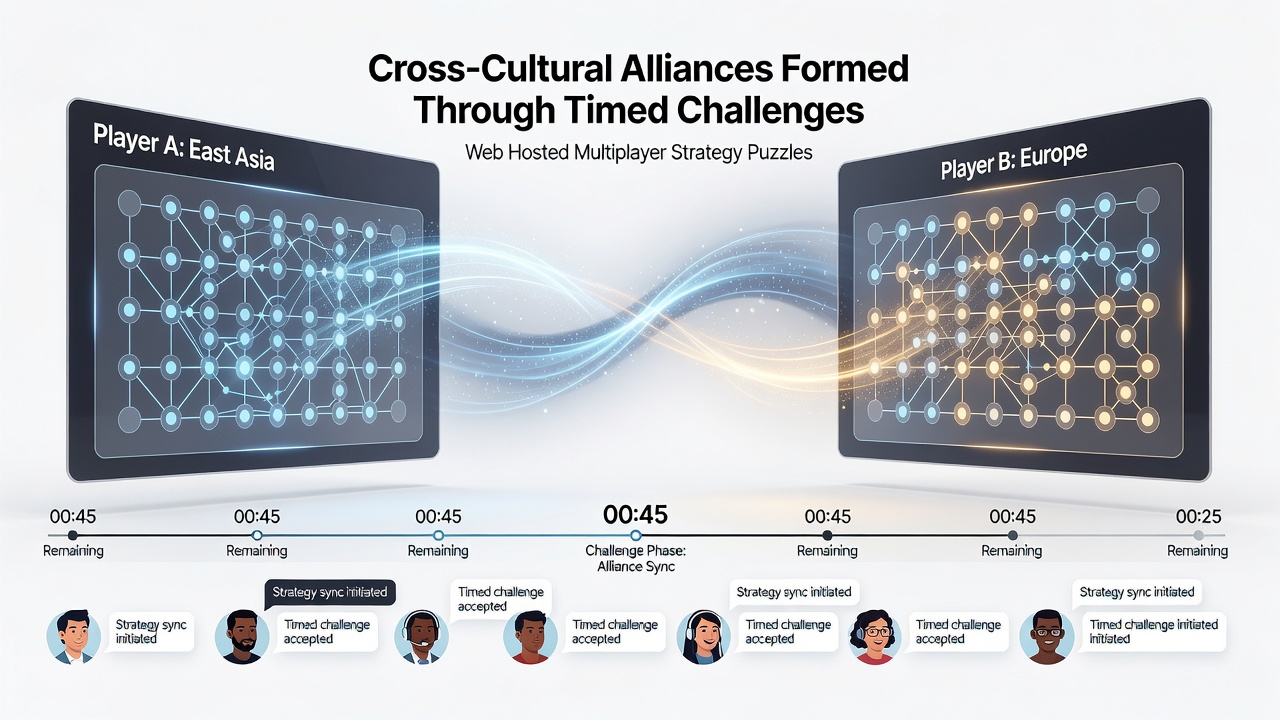
Integration into School Curricula Worldwide
School programs in various regions incorporate these web hosted activities to address curriculum goals related to digital literacy and global awareness. In November 2026, several education ministries plan to reference such platforms during regional conferences on technology enhanced learning. Implementation data from the OECD education reports highlight measurable gains in collaborative problem solving scores among participating classes.
Programs in Singapore and Germany have paired classrooms for weekly timed sessions, and results indicate that students demonstrate improved ability to interpret nonverbal cues transmitted through interface actions. Teachers facilitate initial setup but step back once groups establish their own coordination rhythms, allowing alliances to form organically.
Observed Patterns and Supporting Research
Research from the Australian Department of Education tracks how reflex heavy sequences connect to strategic outcomes across age mixed groups. Findings show that alliances formed under time pressure often persist through follow up activities, including written reports and virtual cultural exchanges. Schools report that participants reference these experiences when discussing broader topics such as international cooperation.
Platform analytics further reveal that successful teams adjust their timing strategies mid session based on observed partner behaviors, a process that researchers link to enhanced cross cultural adaptability. These adjustments occur without direct verbal instruction in many cases, relying instead on pattern recognition within the shared web environment.
Conclusion
Cross cultural alliances emerge consistently through structured timed challenges in web hosted multiplayer strategy puzzles deployed in school programs. Evidence from multiple implementations demonstrates that these activities produce measurable coordination skills and sustained connections among participants from different regions. As more institutions adopt similar approaches, ongoing data collection will clarify long term effects on student collaboration across borders.