Browser-Based Reflex Mapping in Age-Mixed Strategy Puzzles: How Shared Web Inputs Shape Collective Adventure Paths
Geschrieben von Jordan Hansen · 7.10.2026
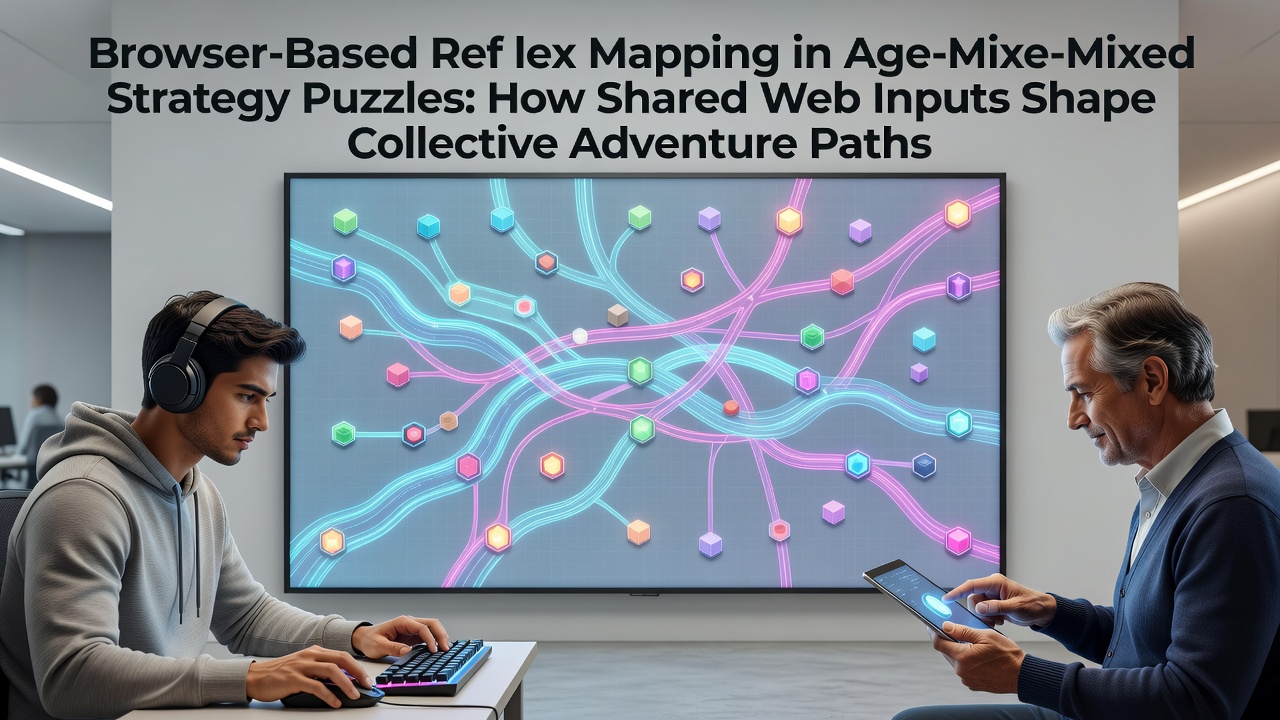
Browser-Based Reflex Mapping in Age-Mixed Strategy Puzzles: How Shared Web Inputs Shape Collective Adventure Paths
Browser platforms now host numerous age-mixed strategy puzzles where reflex mapping converts individual web inputs into coordinated group decisions that guide narrative progress across collective adventure routes, and data from digital engagement studies shows these systems track timing, accuracy, and sequence patterns to adjust difficulty levels dynamically for participants ranging from young children to older adults.
Core Mechanics of Reflex Input Tracking
Shared web environments record mouse movements, key presses, and touch gestures in synchronized sessions, which researchers at various institutions have documented as forming visual maps that highlight successful reflex sequences while flagging areas where coordination breaks down, and these maps update continuously as players complete timed challenges that blend quick reactions with longer-term planning elements such as resource allocation or path selection in branching storylines.
Systems often employ JavaScript-based listeners to capture inputs at millisecond resolution, allowing platforms to correlate reflex performance with strategic outcomes like unlocking new areas or resolving group conflicts, while evidence from cognitive performance analyses indicates that mixed-age teams achieve higher completion rates when younger players handle rapid timing tasks and older participants contribute oversight on narrative branches.
Patterns Across Mixed-Age Participation
Observations from multiplayer browser sessions reveal that reflex mapping influences how groups navigate adventure paths because immediate inputs from one age cohort can redirect the entire collective trajectory, and studies conducted by international bodies such as the OECD on digital skill development confirm that platforms incorporating real-time feedback loops encourage inclusive participation without requiring uniform skill levels among users.
Take one documented case where experts analyzed a browser puzzle involving timed obstacle navigation followed by story decision points, and figures from that analysis showed teams with children aged 8 to 12 alongside adults over 40 produced more varied path selections than single-age groups, since reflex data allowed automatic adjustments that balanced speed-based and deliberation-based contributions.
Integration with Narrative Exploration
Reflex sequences feed directly into adventure progression because mapped inputs determine which collective routes open next, and this linkage appears in numerous browser titles where quick-response mini-games unlock dialogue options or environmental changes that affect all participants simultaneously. What's interesting here is how platforms log these transitions to generate heatmaps of popular paths, enabling developers to refine puzzle structures based on aggregate data rather than isolated performance metrics.

Researchers discovered through longitudinal tracking that input patterns established early in a session often predict final outcomes, such as whether a group favors exploration-heavy routes or efficiency-focused ones, and this predictive capacity stems from algorithms that weigh reflex accuracy against strategic consensus markers collected via chat or voting tools embedded in the same interface.
Developments Anticipated by October 2026
Industry reports project expanded use of browser-based mapping tools in family-oriented platforms by October 2026, driven by advances in web standards that support lower-latency input synchronization across devices, and organizations including the Australian Bureau of Statistics have noted rising household participation in collaborative online activities that combine reflex elements with narrative depth.
These updates are expected to incorporate machine learning refinements that adapt maps to individual age-related response profiles without explicit user configuration, thereby maintaining engagement across broader demographic ranges while preserving the shared nature of adventure path formation.
Conclusion
Browser-based reflex mapping continues to serve as a bridge between immediate player actions and sustained group strategies in age-mixed puzzles, shaping collective adventure paths through documented input correlations and adaptive feedback mechanisms that researchers continue to examine for broader applications in digital collaboration environments.